
Tag: romantasy

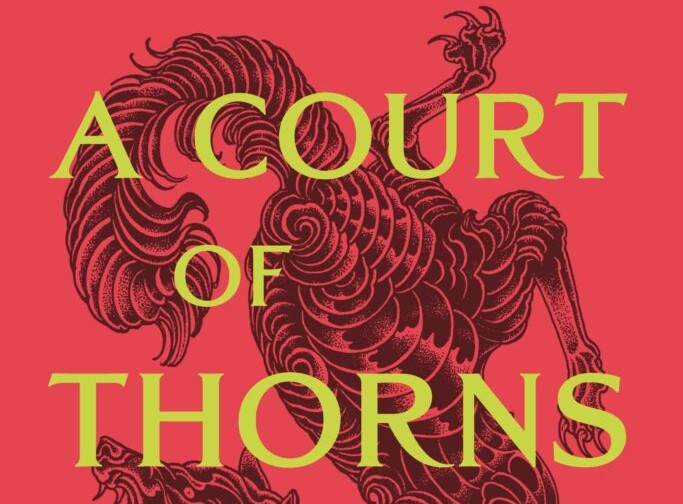
  • A Court of Thorns and Roses – Sarah J Maas

    A Court of Thorns and Roses – Sarah J Maas

    headphones, denoting audiobook

    Audiobook narrated by Jennifer Ikeda

    ‘Do you have a plan?’

    ‘No.’

    There are good books and bad books and in-between books. There are so-good-you-want-to-make-everyone-read-it books, and there are so-bad-you-want-to-warn-everyone-to-avoid-it books. There good books that you plough through and excellent books that you struggle to find the energy for, books that are unreadably bad and books that are plain dull. And then there is the special category of books that are so bad they’re almost good. A Court of Thorns and Roses is not the worst book I’ve ever read, but it might be the best-worst.

    This title, the first in the ‘ACOTAR’ series, as it’s known within the cult, had been a stalwart in my ‘maybe to read’ pile for a couple of years. I was pretty sure it was rubbish, but it had been recommended by at least one person with some crossover in book-taste and I’ve avoided books before out of snobbery that I’ve ended up enjoying. So when I saw it on the lineup for the excellent ‘The Book Club’ podcast – and mistook a jocular reference to it as one presenter’s ‘favourite book of all time’ as a sincere endorsement – I decided it was worth taking the plunge for what was sure to be an easy listen.

    Jennifer Ikeda, despite her unfortunate American accent, does a decent job of the narration, probably working the source material about as well as anyone could.

    Sarah J Maas wrote her first book, Throne of Glass, at age 16 and has amassed a serious cult following with her ‘romantasy’ series, blending high fantasy with adult romance. The first three-quarters of this book is basically Beauty and the Beast reimagined as a gothic bodice-ripper. Throw in some Fae folklore and a few more mythical creatures, Disney tropes and vaguely sketched Fae court politics (and some slightly more explicit bodice-ripping), and you have yourself a global phenomenon and multi-million copy bestseller. The last quarter or so of this indefensibly long slog feels more like a classic fairy tale with twenty-first century teenagers. But there is actually a fair bit of plot here, so I will try to briefly summarise.

    Nineteen-year-old Feyre lives with her two older sisters and crippled father in a small cabin on the edge of the woods. Armed with bow and arrow, she hunts to keep her family fed. When one day she kills a giant wolf who turns out to have been a faery in beast-form, payment is demanded and she is taken to live a life of imprisonment in the Fae realm of Prythian (modelled on ancient Britain).

    What follows is mostly a parade of confusing mythical creatures who inevitably come after Feyre after she repeatedly ignores instructions for own safety – which of course requires her to be rescued by her captor, the High Lord Tamlin, a shape-shifting man-beast cursed to live under a mask, even in human form. Between them slow-boils a hot-blooded love affair, complete with claws, growling and many uses of the words ‘feral’ and ‘predatory’. But in time, Feyre finds that nothing is what it had seemed in Prythian. To rescue her beloved, she goes boldly into the court of evil Queen Amarantha with no plan whatsoever, and finds the fate of the world balanced in her highly incapable hands.

    Like Dragonflight, A Court of Thorns and Roses is quite good as a plot summary. There’s actually a lot going on, but unfortunately it mostly happens off the page. Most of the consequential events and background are narrated through expositional dialogue – and then further explained, just in case you missed it. It reminded me of the new breed of Netflix content produced under the explicit assumption that viewers will be on their phones throughout and only half paying attention. ACOTAR was published in 2015, but had it come out this year I would have seriously questioned if it was written by AI – especially in the light of revelations that many romance writers are already embracing this new technology to spit out over 200 books a year.

    The writing is incredibly childlike, which is an odd juxtaposition with the ‘adult’ content (although it should be said the bodice-ripping mercifully took up much less real estate than I’d expected). There is no subtlety to be found here; no complexity, no nuance, no subtext. Everyone will tell you exactly what they think, and then go to great lengths to explain what they meant by it. The characters are flimsy and the worldbuilding feels thin. The narrative is riddled with inconsistencies, crater-sized plot holes, baffling decision-making and nonsensical sequences of cause and effect. Though the emotional stakes should be high, I could never take anything seriously enough to feel invested in it. I found myself bemused by the supposedly terrifying monsters and the sheer stupidity of basically everyone and everything.

    “He could have had me right there on top of that table. I wanted his broad hands running over my bare skin. Wanted his teeth scraping against my neck. Wanted his mouth all over me.

    ‘I’m trying to eat!’ Lucien said as I blinked, the air whooshing out of me.”

    Which leads to my designation of ACOTAR as the best-worst book.

    Despite the atrocious dialogue, the nonsensical plot, the inconsistent world and idiotic characters, there was somehow enough here to have some fun with. It gave me plenty of (mostly unintended) laughs, and I’ve come to believe that a terrible book beats one that is merely uninteresting. If this book has a saving grace, it’s in the pacing, which keeps the story moving along swiftly enough that you always at least feel like you’re getting through it (albeit making use of the speed-up setting in the audiobook and despairing at the number of chapters still to go.)

    I was determined to finish it out of curiosity (and because I’d paid for it) and so that I could follow along with the ‘Book Club’ episode. As soon as I finished, I tuned in to the podcast, eager to hear the hosts mock and tear it to shreds. Imagine my horror and disappointment when they instead tried to be very fair, assessed it for the light fluff that it is, and both rated it 6/10 – one host raising eyebrows by rating it higher than the Steinbeck classic East of Eden.

    Every now and then Sarah J Maas surprises with a sentence, a character arc or a plot twist that makes you think she could probably write something decent if she tried. It’s obvious this book was written quickly, but when I learned Maas had written it in five weeks, I was actually forced into grudging admiration for the output, given just how quickly she slapped it together.

    Many of the most avid ACOTAR readers seem to be people who are just getting into (or back into) reading for pleasure, and if Maas’s work not only brings joy and excitement but also acts as a gateway into a fulfilling reading life, that can only be a good thing. I couldn’t help making comparisons to Australian author Juliet Marillier, whose book Daughter of the Forest remains an all-time favourite of mine, also heavily inspired by Celtic mythology. Although Marillier’s fantasy romance books are certainly formulaic, they are beautifully written with real emotional stakes and well-developed characters. I hope some ACOTAR fans will find their way to her.

    There has long been the kind of commercially successful genre book that worships at the altar of substance and throws style out the stained glass window. There are highly prolific authors like James Patterson essentially running book factories with teams of junior co-authors. I’m not going to argue with the millions of people around the world who have showered adoration on this book and the ACOTAR series.

    Sarah J Maas is clearly onto a winning formula and good luck to her – but having dipped my toe into the world of the Fae, I was left with no desire to become a permanent resident of Prythian and offer up my brain in sacrificial worship to Queen SJM at the ritual bonfire.
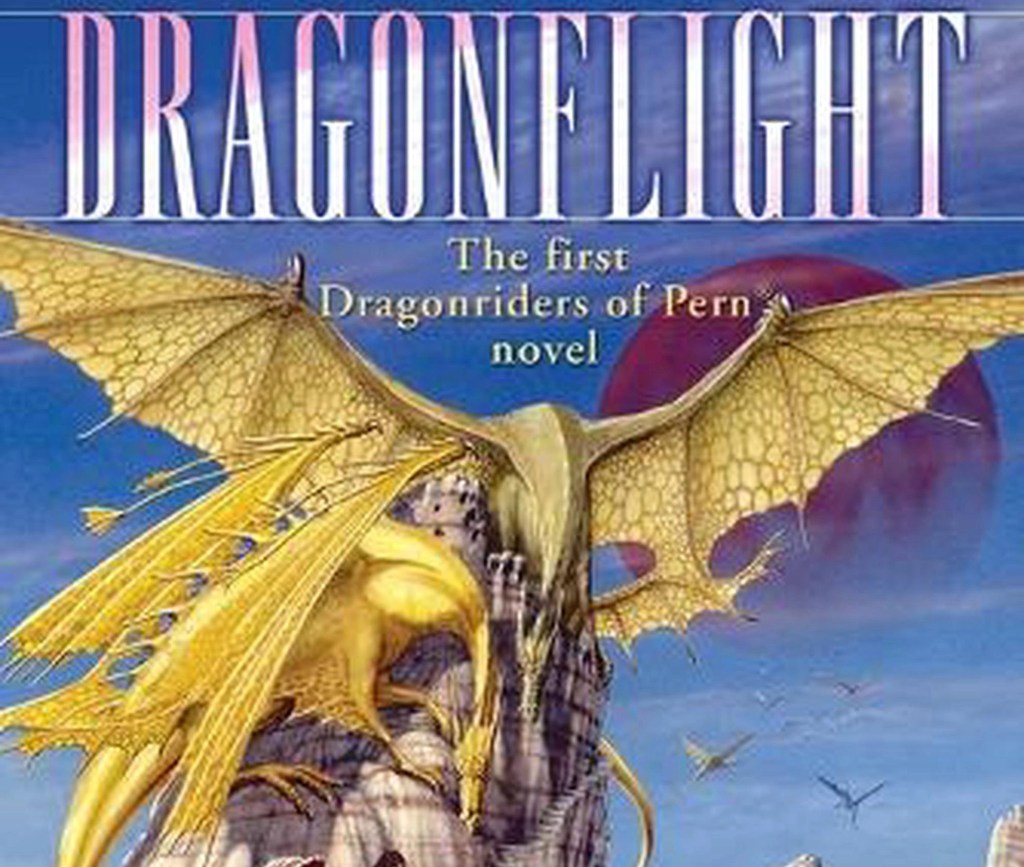
  • Dragonflight – Anne McCaffrey

    Dragonflight – Anne McCaffrey

    Audiobook narrated by Sophie Aldred

    Drummer beat and piper blow

    Harper strike and soldier go

    Free the flame and sear the grasses

    Till the dawning red star passes

    Floundering in my endless quest to find great new fantasy / sci-fi / dystopian reads, I recently decided to revisit some fantasy books I had enjoyed in my teenage years and see how they held up to rereading.

    This one did not hold up. I was left feeling somewhat ashamed of my teenage-self, who happily chowed through quite a number of books in this series. I struggle to match up the teenage-self of my memory—who I’m sure was an erudite reader of the classics and a deep thinker with highly sophisticated taste—with the one who enjoyed this drivel enough to return to the library for sequel after sequel.

    First published in 1968, Dragonflight was a pioneer of the genre and has clearly served as inspiration for many other books and series since—including possibly the entire ‘romantasy’ genre. It won McCaffrey both a Nebula and a Hugo award, making her the first woman to win either of those prizes. The story is of a young woman, Lessa, who escapes a life of servitude to become a dragon queen tasked with saving her planet from destruction.

    All of this is a strange precursor to the following statement, which is that this is possibly the most sexist novel I’ve ever read (with the possible exception of Cormac McCarthy’s Outer Dark.)

    On the distant planet of Pern, far into the future, humans have set up an agrarian colony which has functioned for over 2000 years with just one major problem. The irregular orbit of a neighbouring planet periodically brings it close enough to cause atmospheric changes that result in ‘Thread’ (think acid rain) to fall from the sky, turning fertile soil to wasteland. Cue the dragonriders, who combat the falling Thread with fire-breathing dragons, genetically engineered from an endemic reptile species.

    Lessa is the sole survivor of a noble family killed by a usurper. She survives by disguising herself as a kitchen maid serving her family’s murderers—until one day she is rescued / captured by the dragonrider F’lar, who sees in her a chance to regenerate his declining weyr (dragon commune) in preparation for the next Threadfall, a threat the people of Pern have all but forgotten.

    So far so good. As a plot summary, Dragonflight is excellent. As a book, not so much. It’s hard to believe that such a great premise could be so poorly executed, especially considering that McCaffrey is not an untalented writer.

    Even as I get this all down, my appreciation for the world, the ideas and the premise of the story is almost making me feel like reading it again. It’s the same devil’s voice that keeps telling me I want to watch the Harry Potter movies one more time, only to find that they haven’t got any better in the last decade. It’s that part of me that can’t relinquish the idea of how good something could have been, despite reality having resoundingly proven it otherwise. McCaffrey’s worldbuilding is excellent and her prose is solid and assured, but these can’t redeem the faults in other essential story elements.

    After her forceful translocation, Lessa imprints with the gold dragon queen, forming a telepathic bond, and becomes Weyrwoman of Benden Weyr. It sounds like our girl has risen to great heights, except that it turns out the duties of the esteemed Weyrwoman turn out to mostly comprise cleaning, housekeeping and stocking the pantry. And she’d better do it right, or Weyrleader F’lar will shake her. That’s right, physically shake her. He does this a lot.

    “Oh, F’lar will be so angry with me. He will shake me and shake me. He always shakes me when I disobey him.”

    The story alternates between Lessa’s and F’lar’s point of view, which is one of its key weaknesses as F’lar is about the most unlikeable character ever put to the page. Which is unfortunate for Lessa, because as the Weyrleader bonded to the bronze dragon, F’lar is bonded to her, too.

    The telepathic bond shared between dragons and their riders extends to a seasonal dragon mating flight, during which the dragons’ bonded human pairs get tangled up in the passion. This means the dragonriders don’t choose their romantic or sexual partners, which results in some loose boundaries around consent. This is the way of things at the weyr and generally accepted, but Lessa, an outsider, is inadequately warned or prepared. Worse, F’lar continues to ‘share her bed’ after this event (sans synchronous dragon sex), despite Lessa’s total lack of enthusiasm. While the lack of consent is acknowledged, it’s not judged as particularly problematic, either by F’lar or by Lessa, which makes the story an incredible legitimisation of rape culture.

    He had been a considerate and gentle bedmate ever since, but, unless Ramoth and Mnementh were involved, he might as well call it rape. Yet he knew someday, somehow, he would coax her into responding wholeheartedly to his lovemaking. He had a certain pride in his skill, and he was in a position to persevere.

    Passages like the above are hard to read, and it’s hard to spend so much time inside the head of someone so deeply unlikeable.

    All those years ago I remember being disturbed by an even-more egregious scene in the second Dragonriders book where the love interest of a young, scared female character sexually assaults her to ‘prepare’ her for the dragon-mating experience with another rider—a crime presented and accepted as an act of necessary cruelty with her best interests in mind. I had forgotten how much this scene exemplified the norms within the Pern novels.

    Though she hardly started the trend. McCaffrey feels like an unhelpful instalment in the long line of female writers propagating damaging norms around sexualised violence and coercive control, sold as titillation (looking at you, Fifty Shades of Gray).

    It would have been so nice to see the controlling, arrogant F’lar get his comeuppance in this story, or perhaps a redemptive character arc. But no. F’lar is possessed of a unique foresight and strategic skill. All his unpopular theories turn out to be true. He thinks he can continually rape Lessa until she starts to like it, and guess what…

    All this makes me think of other times I’ve had the discussion: ‘is it a sexist book, or just a book depicting a sexist world?’ Many people point to the fact that the culture around consent and gender norms was very different in the sixties when this book was written, but that doesn’t seem like an adequate explanation.

    No one has ever accused Jane Austen or the Brontes of degrading women in their work, though they wrote in a time far behind 1960s America in terms of women’s standing in society. The female characters in these books were fully realised humans who chafed against their constraints and grew as a result, shaped in partnership or in opposition to the world around them.

    I don’t think it’s particularly hard to distinguish a sexist book from a sexist world. In the former, female characters are poorly developed, often thrown in only as love interests for the male characters, and limited in ways that the narrative does not recognise or address. In the latter, female characters are given equal or greater depth to their male counterparts. Their needs and desires are equally recognised by the narrative, if not by those around them, and form the shape of their character arc.

    And honestly it’s hard to judge Dragonflight by this measure, as all the characters are so flat and one-dimensional that it’s hard to know what any of their needs and wants are. What can be determined is that the book legitimises the treatment of women in the reactions of the female characters, or the lack thereof.

    Where Lessa should be a feminist icon, riding out on her gold dragon to save the planet, she feels more like a mute wallflower, living in fear of F’lar’s temper and the inevitable shaking that ensues whenever he catches her ‘disobeying’ him. Instead of rising up against this or finding ways to grow in opposition to his treatment, Lessa never seems to question F’lar’s right to manhandle and rape her. All she needs is a bit of time for his arrogant charms to work their wiles.

    Riding on plot momentum and curiosity alone, I pushed through to the end of Dragonflight. But if I seem hazy on how the story ends or have got some details incorrect, it’s because I didn’t care enough to rewind if I fell asleep halfway through a chapter or got distracted by a bird and missed a chunk of storyline. I should mention that narrator Sophie Aldred does a great job and her lilting tones probably played a significant role in getting me through the book.

    From an exciting story premise and some strong worldbuilding, McCaffrey is able to extract only shadows of characters, who float through the world lazily pushing the plot along. The decision to tell half the story from F’lar’s perspective steals the spotlight from the female protagonist, who is under-developed and, while much more sympathetic, also just not that much fun. The character interactions are shallow and at times baffling. The readerly jaw, dropped initially by the rampant misogyny, ends up stretched in a giant and ongoing yawn.

    All I can say in defence of my younger self—and the judges who awarded this book the most coveted awards in the science-fiction and fantasy genres—is that it may have been, for both of us, a first encounter with such an elaborately conceived sci-fi world. I was perhaps so bedazzled by the idea of what the book could have been that I forgot to tell the devil on my shoulder to shut the hell up and give me something decent to read.